
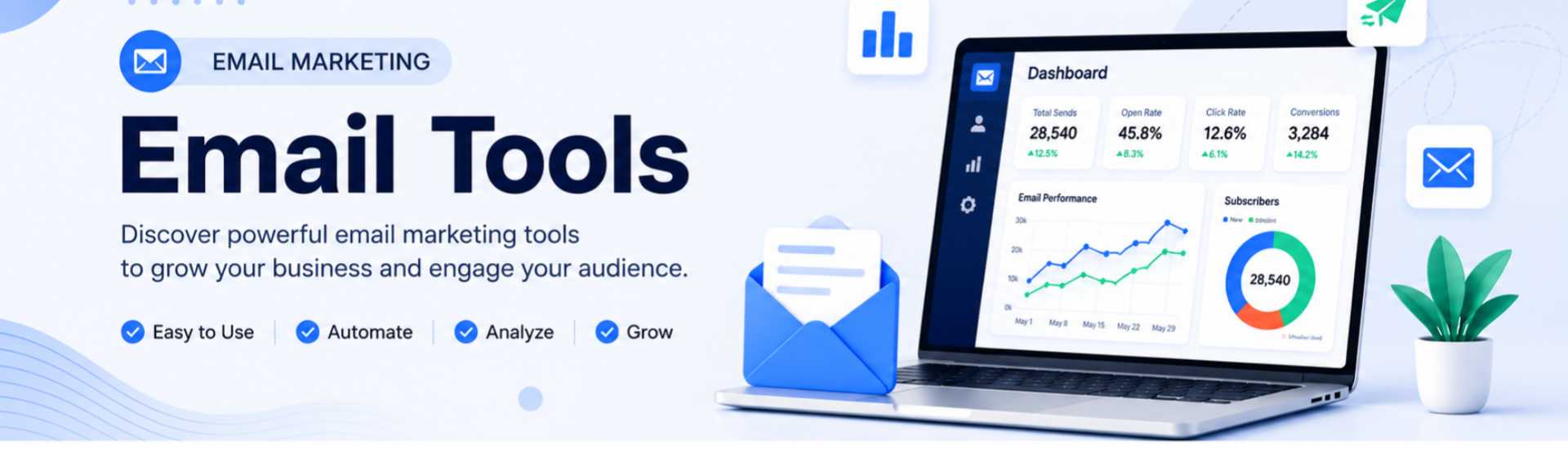
Email marketing remains one of the most effective ways for businesses, creators, and online entrepreneurs to build relationships with customers and increase sales.
Unlike social media platforms where you depend on algorithms, email marketing allows you to communicate directly with your audience through a channel you control.
For beginners, starting email marketing may seem complicated. You need to choose the right tools, build an email list, create campaigns, and understand automation.
This guide explains how to start email marketing step by step, even if you have no previous experience.
Email marketing is a digital marketing strategy that uses emails to communicate with customers, subscribers, or potential buyers.
Businesses use email marketing to:
Share updates and announcements
Promote products or services
Build customer relationships
Generate leads and sales
Send automated follow-up messages
A typical email marketing process looks like this:
Attract Visitors → Collect Email Subscribers → Send Emails → Build Relationships → Generate Sales
Email marketing provides several advantages compared with other marketing channels.
Direct communication: You can reach subscribers without relying on social media algorithms.
Cost-effective: Many email marketing platforms offer affordable plans for small businesses.
Automation: You can create automated email sequences that work continuously.
Customer retention: Email helps businesses stay connected with existing customers.
Higher conversion potential: Targeted emails can encourage subscribers to take action.
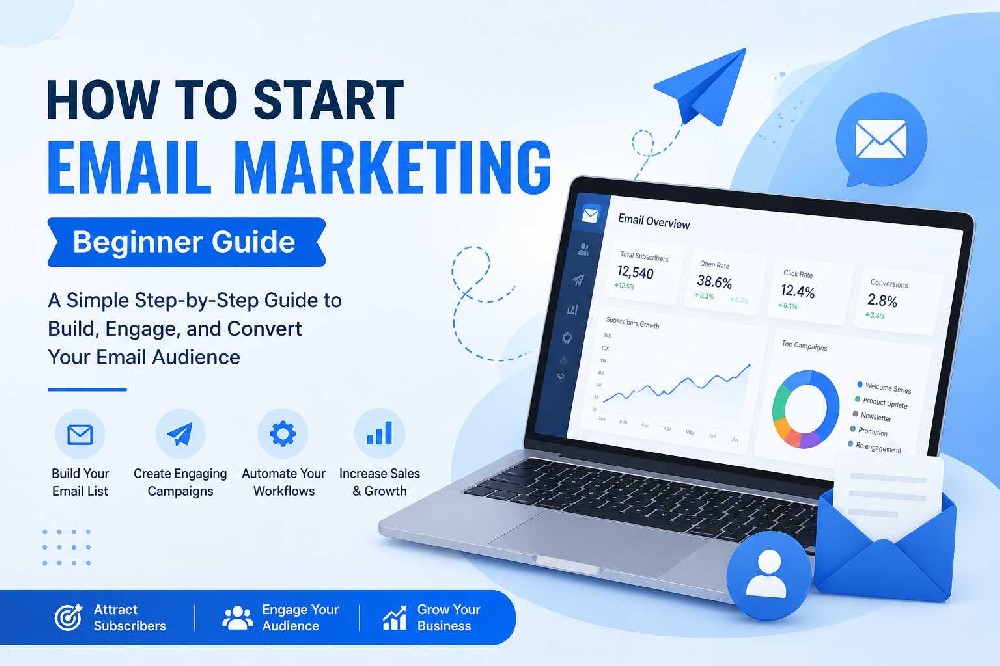
The first step is selecting an email marketing tool that matches your needs.
A good email marketing platform should include:
Email campaign builder
Subscriber management
Email automation
Templates
Analytics and reporting
Landing page or funnel features
Popular email marketing tools include:
Systeme
Brevo
Mailchimp
ActiveCampaign
MailerLite
Kit
You can compare different platforms in our Email Tools section or read detailed software analysis in our Reviews section.
Your email list is the foundation of your email marketing strategy.
Instead of buying email lists, focus on collecting subscribers who are genuinely interested in your content or products.
Common ways to grow an email list include:
Create a free guide or checklist
Offer discounts or special promotions
Add signup forms to your website
Create valuable blog content
Use landing pages to collect leads
The quality of your subscribers is usually more important than the size of your list.
An email campaign is a series of messages sent to your subscribers for a specific purpose.
Common email campaigns include:
Welcome emails
Product announcements
Newsletter updates
Educational content
Promotional campaigns
A simple first email campaign structure:
Introduce yourself or your business
Provide useful information
Build trust with your audience
Include a clear call-to-action
Email automation allows you to send targeted emails automatically based on subscriber actions.
Examples of automation workflows:
Welcome email series after signup
Follow-up emails after downloads
Abandoned cart reminders
Customer onboarding emails
Product recommendation emails
Automation helps businesses save time while maintaining consistent communication with their audience.
Successful email marketing requires continuous improvement.
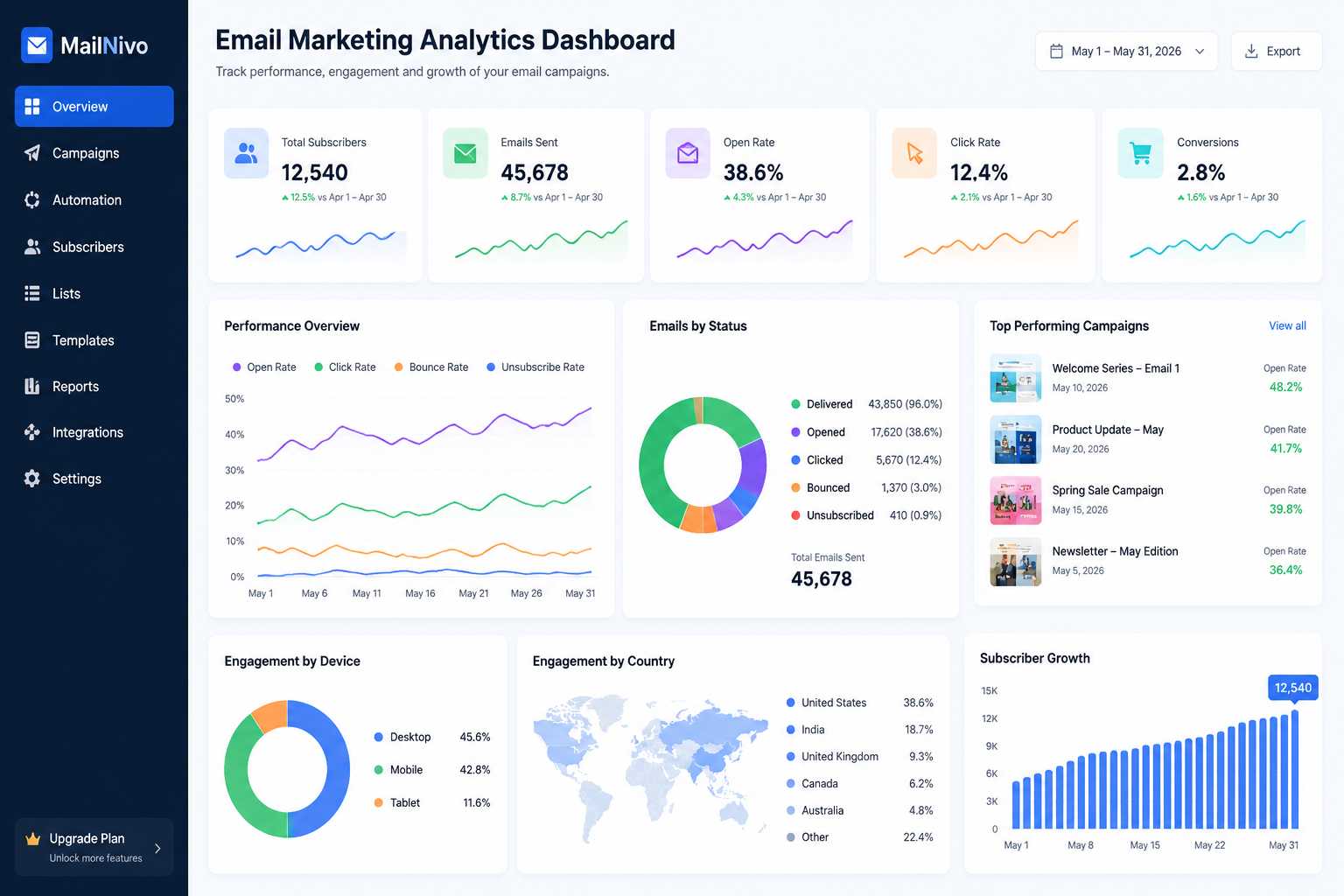
Important metrics to monitor include:
Open rate
Click-through rate
Subscriber growth
Conversion rate
Email revenue
Testing different subject lines, email designs, and content styles can help improve campaign performance.
Send valuable content instead of only promotional emails
Keep your emails simple and easy to read
Segment subscribers based on interests
Maintain a consistent sending schedule
Always provide useful information
Optimize emails for mobile devices
Buying email lists
Sending too many promotional emails
Ignoring email deliverability
Not testing campaigns
Failing to segment subscribers
Many email marketing platforms offer free plans or affordable options for beginners. Costs usually depend on the number of subscribers and required features.
Most beginners can start with one or two valuable emails per week and adjust based on audience engagement.
The best tool depends on your goals. Beginners often choose platforms with simple interfaces, automation features, and easy campaign creation.
Starting email marketing does not require advanced technical skills. By choosing the right platform, building an engaged email list, creating valuable campaigns, and using automation, anyone can develop an effective email marketing system.
Email marketing is a long-term strategy. The sooner you start building your audience, the more opportunities you create for future growth.
Explore our Email Marketing Software Reviews to find the right platform for your business.
Disclaimer MailNivo provides software reviews, information, and educational content for reference purposes only. We do not develop, sell, distribute, or provide technical support for any third-party software mentioned on this website. All product names, trademarks, copyrights, and intellectual property rights belong to their respective owners. Some links on this website may be affiliate links, which means we may earn a commission if you make a purchase through these links, at no additional cost to you. Users are responsible for evaluating and using third-party products and services according to their own needs and applicable laws. MailNivo is not responsible for any issues, losses, or consequences arising from the use of third-party software or services. XML Sitemap
 Website Feedback